Flat Roofs Built for Continuous Use
Commercial Roofing in Weatherford for multi-unit properties, retail buildings, and low-slope installations
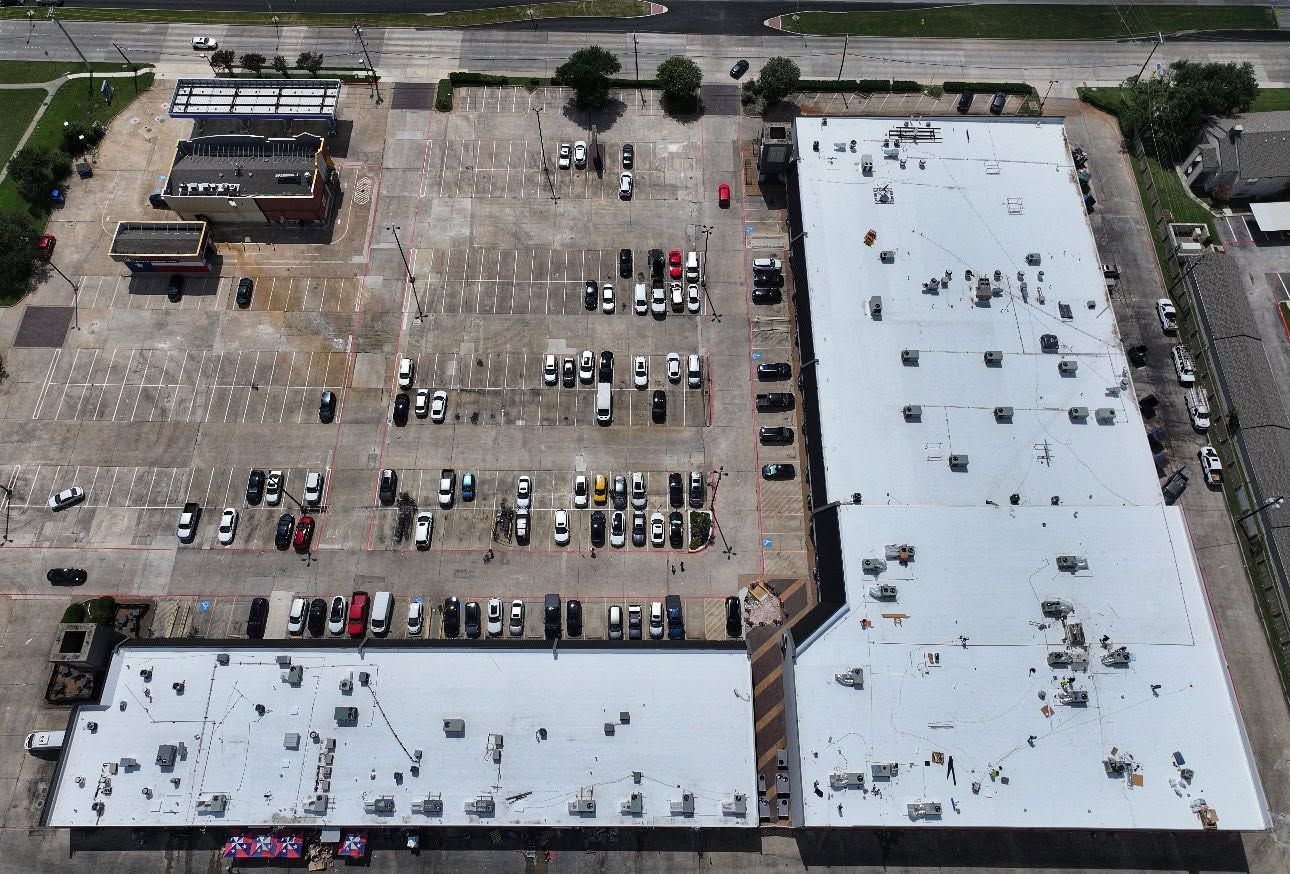
Strip mall construction corridors and multi-tenant commercial buildings throughout the Weatherford and metro DFW area require flat and low-slope roofing systems that handle foot traffic from HVAC maintenance, resist pooling water that steep residential roofs shed naturally, and maintain seam integrity under thermal expansion cycles that cause poorly installed membranes to separate at the most vulnerable transition points. Commercial roofing for these applications uses TPO, MODBIT, PVC, or EPDM membrane systems selected based on building envelope requirements, expected maintenance access frequency, and warranty terms that property owners need to satisfy lender or tenant lease obligations. TripleC Roofing TX installs, repairs, and maintains commercial roofing projects across the region, large-scale work where multiple roofs must be installed or repaired simultaneously without disrupting tenant operations or exposing interior spaces to weather during the construction phase.
Flat roof material selection depends on whether the building has high UV exposure from unshaded orientation, whether foot traffic from maintenance personnel will concentrate wear in certain areas, and whether the existing roof structure has adequate slope to prevent water from pooling in low spots that eventually degrade membrane material and cause leaks. TPO membranes offer heat-welded seams and reflective surfaces that reduce cooling costs, MODBIT provides multiple waterproof layers with granulated top surfaces that resist UV degradation, PVC delivers chemical resistance for buildings with exhaust vents or industrial processes, and EPDM remains the most economical option for low-traffic roofs with minimal penetration complexity.
Request a building envelope evaluation to determine which commercial roofing material and installation method aligns with your property's structural condition and operational requirements.
Why Flat Roof Installation Works Differently
Commercial flat roof installation begins with removing the existing membrane and insulation layers down to the roof deck, then installing tapered insulation if needed to create positive drainage toward roof drains or scuppers where water can exit instead of pooling. The crew fastens or adheres the new membrane system using methods specified by the manufacturer to meet wind uplift ratings required by local building codes, then heat-welds or chemically bonds seams to create continuous waterproof barriers that do not rely on overlapping material alone to prevent water intrusion.
Once the installation is complete, the roof surface will drain properly without ponding water that sits for days after rain events, seams will remain sealed even when thermal expansion causes the membrane to shift slightly during temperature swings, and penetrations around HVAC units and vent pipes will stay watertight because flashing details were installed with adequate overlap and fastener spacing to prevent uplift. For multi-tenant properties, coordinated installation across several roof sections allows tenants to continue operations below without interruption, and the work schedule is adjusted around delivery schedules or high-traffic business hours to minimize disruption.
Commercial roofing projects include preventative maintenance plans that inspect membrane condition annually, clear drain pathways before rainy seasons, and reseal penetrations before minor gaps become full leaks requiring emergency repair. TripleC Roofing TX handles hail and wind resistance requirements specific to North Texas weather patterns, selecting membrane thickness and fastening density that prevent damage during spring storm seasons when commercial properties face the same severe weather risks as residential buildings but with higher financial consequences from business interruption if leaks force temporary closures.
What Property Owners Usually Ask
Commercial roofing decisions involve balancing upfront costs against long-term performance and understanding how different materials respond to specific building conditions and maintenance realities.
What determines whether TPO or MODBIT is the better choice for a commercial flat roof?
TPO costs less to install, reflects more sunlight to reduce cooling loads, and creates stronger seams through heat welding, while MODBIT provides redundant waterproof layers, resists puncture damage better during maintenance access, and handles temperature extremes without becoming brittle as quickly as single-ply membranes.
How does seam welding on TPO or PVC membranes prevent leaks better than overlapping seams?
Heat welding melts the membrane material at seam edges and fuses them into a single continuous piece stronger than the surrounding membrane, while overlapping seams rely on adhesive or mechanical fasteners that can separate under wind uplift or thermal movement and create water entry points.
Why do some flat roofs develop ponding water even after new installation?
Inadequate roof deck slope, insulation that compresses unevenly under membrane weight, or structural settling that creates low spots all cause water to pond, and solving the problem requires tapered insulation installation or additional roof drains rather than simply replacing the membrane over the same inadequate substrate.
What maintenance does a commercial flat roof require to reach its expected lifespan?
Annual inspections identify small punctures or seam separations before they become full leaks, drain cleaning prevents water backup that overloads the membrane, and penetration resealing around HVAC equipment stops minor gaps from expanding under thermal cycling and wind pressure.
How long does commercial roof installation take on a typical retail building in Weatherford?
A single-story retail building with straightforward layout and minimal rooftop equipment is usually completed in several days to a week depending on roof size and membrane type, while multi-building properties require longer schedules coordinated to avoid exposing all buildings simultaneously if weather delays occur.
Commercial roofing by TripleC Roofing TX includes warranty documentation that separates material coverage from installation labor warranties, insurance claim coordination for storm-damaged commercial properties, and project scheduling that minimizes tenant disruption. Call (817) 308-2098 to discuss your property's roofing needs and arrange an inspection that identifies current condition and remaining lifespan of existing systems.