Commercial Roofs Built for Wind Resistance
MODBIT Roofing in Weatherford for commercial flat and low-slope roofs requiring torch-applied membrane installation
Wind uplift during North Texas storms pulls at roof edges and seams, testing the bond between roofing membrane and substrate. TripleC Roofing TX installs MODBIT roofing systems that use torch-applied heat to create immediate adhesion across the entire membrane surface. The service area includes Weatherford, Fort Worth, Arlington, Burleson, Crowley, Denton, Granbury, Northwest Hills, and surrounding areas, where commercial buildings frequently require retrofit installations over aging flat roof systems.
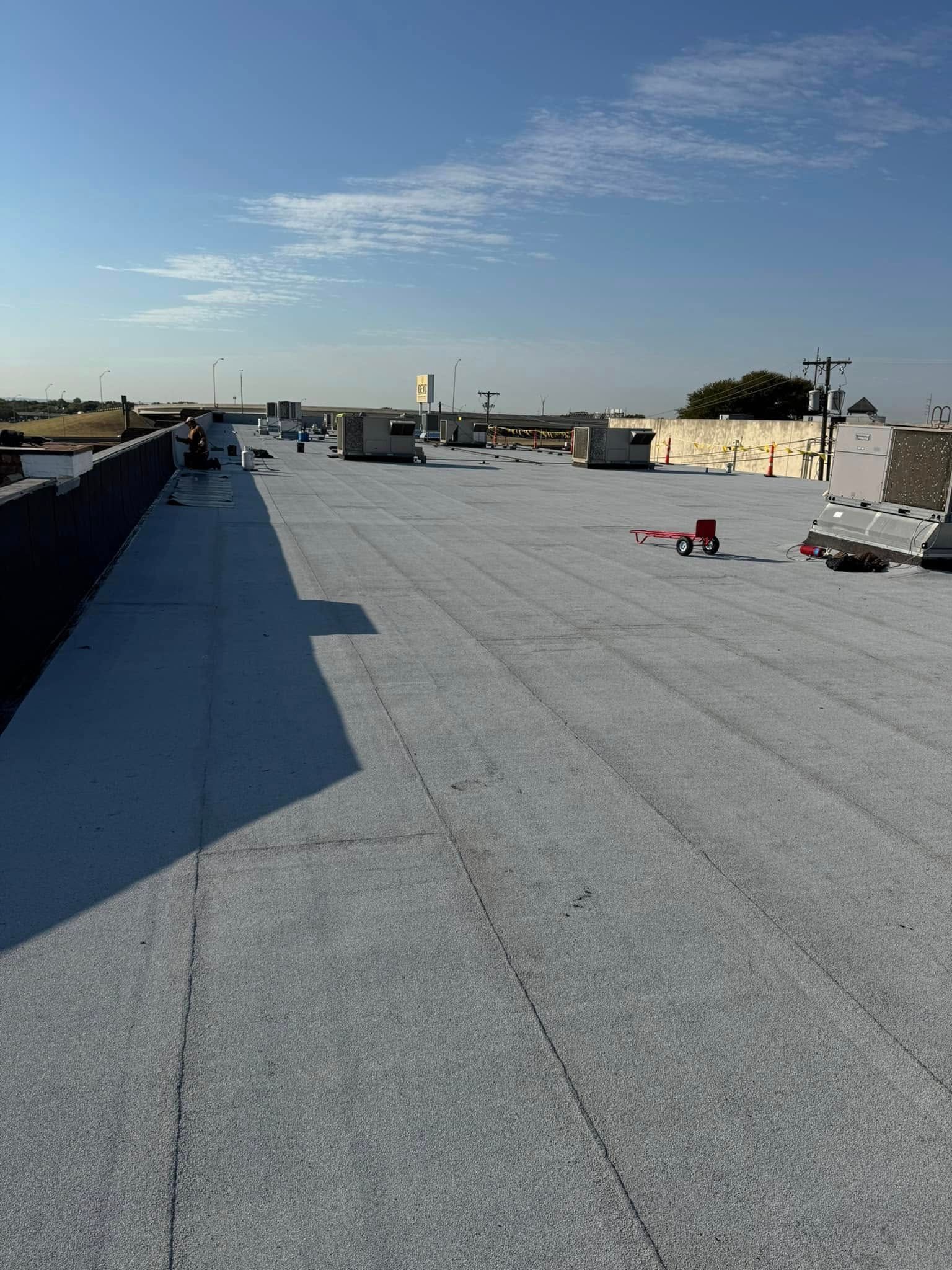
Modified bitumen membranes contain polymer modifiers that make the asphalt-based material more flexible than traditional built-up roofing, allowing the surface to expand and contract through seasonal temperature cycles without cracking. Torch application heats the membrane's underside until the modified asphalt melts, bonding directly to the prepared substrate as the installer unrolls each sheet.
Arrange an on-site assessment to evaluate your building's existing roof structure and drainage system layout.
Why Torch Application Works for Retrofit Projects
Torch-applied installation uses open-flame propane torches to heat the membrane's bottom surface, causing the modified bitumen to flow and bond as the roll is positioned. This method creates full-surface adhesion rather than relying on perimeter fastening or adhesive strips, which matters when existing roof decks may have inconsistent fastener holding strength. Overlapping seams receive additional torch treatment, melting both layers together into a continuous waterproof barrier.
You'll notice the granulated surface texture that provides UV protection and creates traction for foot traffic during maintenance access. Water no longer pools in the low spots that develop on aging flat roofs, because proper slope correction and drainage system design occur during substrate preparation. The torch-applied bond remains intact during thermal expansion, preventing the edge lifting and seam separation that occurs with mechanically fastened systems under wind load.
The installation includes flashing details at roof penetrations, parapet walls, and HVAC curbs, with each transition point receiving overlapping membrane layers torch-welded in place. Material selection accounts for the building's exposure to sun versus shade, with lighter-colored cap sheets specified for areas receiving direct afternoon sun exposure common in Weatherford's western-facing commercial corridors.
Answers to Frequent Service Questions
Modified bitumen installation involves torch work and substrate preparation that affect both project timeline and long-term roof performance in commercial applications.
What makes modified bitumen different from standard asphalt roofing?
Modified bitumen incorporates rubber or plastic polymers into the asphalt base, creating a membrane that stays flexible at low temperatures and resists flowing at high temperatures. Standard asphalt becomes brittle in cold weather and can soften excessively during Weatherford's summer heat.
How does torch application differ from cold-applied installation methods?
Torch application creates an immediate bond through heat fusion, eliminating the curing time required for adhesive-based methods. Cold-applied systems rely on solvent evaporation or chemical cross-linking that can be affected by humidity and temperature conditions during installation.
When is MODBIT the right choice versus TPO or PVC?
Modified bitumen suits retrofit projects where torch application can compensate for substrate irregularities, and buildings where the granulated surface's durability matters for rooftop equipment access. TPO and PVC offer lighter weight and higher reflectivity but require smoother substrate conditions.
What warranty coverage applies to torch-applied roofing?
Material warranties cover membrane defects and typically run 10 to 20 years depending on the cap sheet grade selected. Labor warranties cover installation workmanship separately, addressing issues like inadequate seam overlap or improper flashing details.
How do drainage requirements affect MODBIT installation?
Proper slope directs water toward drains and scuppers, preventing the ponding that shortens any flat roof's lifespan. Tapered insulation systems installed beneath the membrane create positive drainage on structurally flat decks, a common requirement in the commercial buildings across the Weatherford area.
TripleC Roofing TX provides detailed project specifications before installation begins, outlining substrate preparation requirements and expected project duration based on building size and weather windows. Request a property evaluation to determine if MODBIT installation addresses your building's specific wind exposure and drainage challenges.