Rubber Membranes Engineered for Hail
EPDM Roofing in Weatherford for flat and low-slope commercial buildings and homes requiring impact-resistant rubber roofing systems
Hail storms move through North Texas with enough frequency that roofing material selection often prioritizes impact resistance over other performance factors. EPDM rubber roofing absorbs hail strikes without puncturing, a characteristic that makes it a common choice for the commercial and industrial buildings across Weatherford, Arlington, and the strip mall corridors extending through the DFW area. TripleC Roofing TX installs EPDM membrane systems with heat-sealed seams and full-coverage attachment that prevents wind-driven water intrusion during the severe weather events typical of the region.
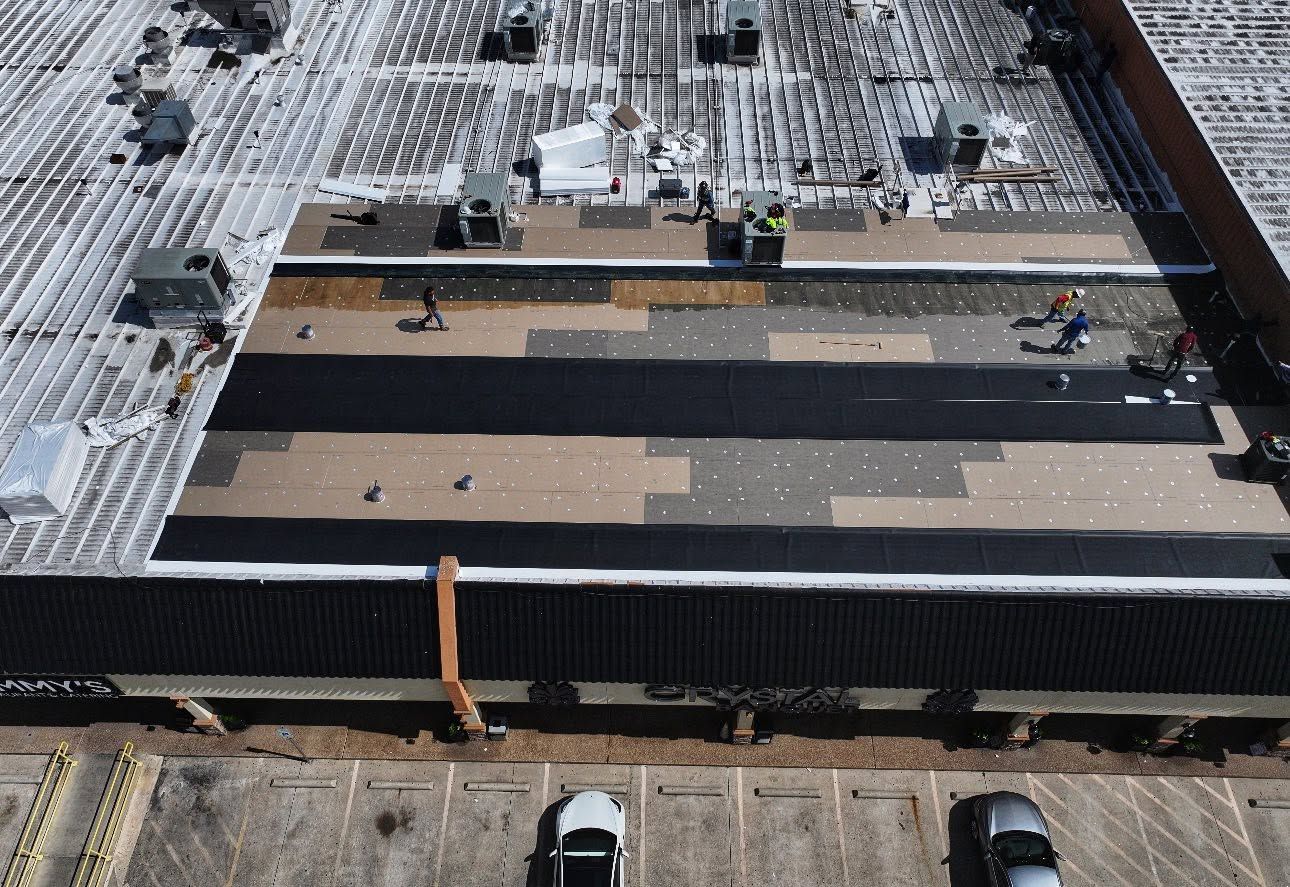
The black rubber membrane arrives in large sheets that are rolled across the prepared roof deck, positioned to minimize seam count, then secured using either fully adhered bonding adhesive or mechanical fastening with batten strips at seams. Seams receive heat treatment or tape sealing depending on the system specification, creating watertight connections at every overlap.
Arrange a property inspection to assess your building's current roof condition and identify any structural concerns before membrane installation.
What Proper EPDM Installation Requires
EPDM installation begins with deck preparation that removes any debris, protrusions, or damaged areas that could telegraph through the rubber membrane and create stress points. The deck must be dry before adhesive application or mechanical fastening begins, because moisture trapped beneath the membrane leads to rot in wood decks or corrosion in metal substrates. Attic ventilation assessment occurs during the pre-installation inspection, catching inadequate airflow that causes condensation buildup on the membrane's underside—a hidden damage pattern that shortens roof lifespan without visible symptoms from ground level.
Once installation completes, the roof surface sheds water to perimeter drains without ponding, assuming proper slope exists or was created through tapered insulation. The rubber membrane's flexibility allows it to accommodate building movement and thermal expansion without cracking at seams or fastener points. You won't see exposed fasteners on fully adhered systems, and mechanically attached installations use batten strips that clamp the membrane edges while distributing stress across wider areas than individual fasteners would.
TripleC Roofing TX provides photo documentation during installation and includes flashing details at all roof penetrations, HVAC curbs, and parapet walls. The rubber material handles UV exposure without requiring protective coatings, though the black surface does absorb more heat than lighter-colored roofing options—a trade-off between impact resistance and cooling load reduction.
Questions Before Starting Your Project
EPDM roofing decisions involve understanding material characteristics and installation methods that affect both immediate project cost and long-term maintenance requirements for buildings in the Weatherford climate.
How does EPDM handle the UV exposure typical of North Texas summers?
EPDM rubber contains carbon black and polymer stabilizers that resist UV degradation without requiring surface coatings. The material maintains flexibility and waterproofing integrity through decades of sun exposure, though the black surface does contribute to higher rooftop temperatures than reflective white membranes.
What causes EPDM seams to fail over time?
Seam failures typically result from inadequate overlap during installation, contamination preventing proper adhesion, or stress concentration at corners and penetrations where membrane movement pulls at connection points. Heat-sealed seams eliminate many adhesive-related failures by creating thermal bonds similar to the base membrane's molecular structure.
Why inspect the attic during roof installation planning?
Attic inspections reveal moisture staining, inadequate ventilation, or structural damage that isn't visible from the roof surface but will compromise any new roofing system installed over compromised decking. This step prevents discovering hidden problems after membrane installation, when repairs become significantly more complex and expensive.
When does EPDM make sense versus TPO or PVC for flat roofs?
EPDM suits buildings prioritizing impact resistance and lower initial cost, particularly for owner-occupied properties where the dark surface's heat absorption matters less than rental properties with tenant-paid cooling costs. TPO and PVC offer better reflectivity and chemical resistance but at higher material costs.
How do insurance claims affect EPDM installation after storm damage?
Storm damage documentation through professional inspection provides the evidence adjusters require to approve replacement rather than repair-only coverage. TripleC Roofing TX's 90-person crew capacity handles the surge work that follows major hail events across Weatherford and surrounding areas, when contractor availability becomes a project timeline constraint.
TripleC Roofing TX works with insurance adjusters regularly, providing documentation that supports claim approval and explaining coverage limitations before installation begins. Request an inspection that includes both roof surface and attic examination to identify all factors affecting your roofing system's performance and replacement requirements.