Roofs Built for Decades of Weather
Roof Installation in Weatherford for homes and commercial properties exposed to North Texas hail and wind seasons
TripleC Roofing TX installs residential and commercial roofs across the Weatherford and DFW area using GAF and Owens Corning materials selected for North Texas climate conditions. If your property needs a complete roof replacement due to age, repeated storm damage, or insufficient protection against hail and wind events common to this region, the installation process begins with a full attic inspection that reveals structural readiness and ventilation requirements before any material goes on. This attic-level evaluation differentiates the work from competitors who walk the roof surface only and miss hidden rot, inadequate framing, or moisture problems that compromise the new roof before installation is finished.
The installation includes material selection matched to your building type and exposure—asphalt shingle, metal, TPO, MODBIT, PVC, or EPDM—with each option evaluated for wind uplift resistance and hail impact tolerance based on your property's orientation and surrounding tree cover. For commercial projects such as strip mall construction corridors in the metro area, flat roof systems require different installation depth and seam welding standards than residential steep-slope applications, and the crew adjusts fastener spacing and underlayment layers accordingly to meet warranty requirements and prevent ice dam formation during winter freeze cycles.
Schedule a property evaluation to determine which roofing material and installation approach fits your building's structural condition and climate exposure.
What Proper Installation Requires
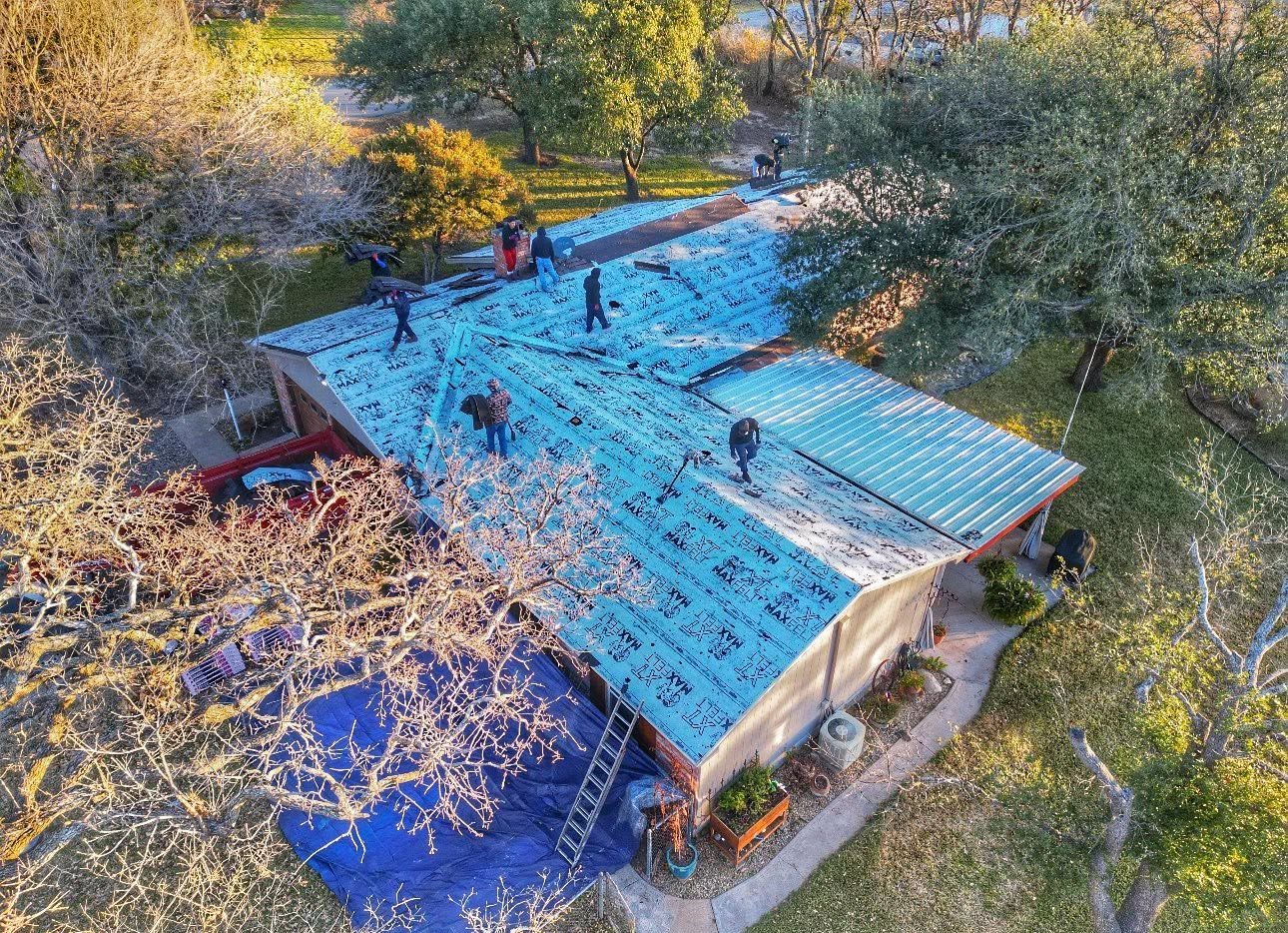
Roof installation begins with the attic inspection that identifies whether existing framing, ventilation pathways, and decking can support the new material without sagging or trapping moisture. The crew removes old shingles or flat roof membranes down to the decking, replaces any rotted or damaged wood sections, installs ice and water shield along eaves and valleys where water accumulation is highest, and then lays underlayment before fastening the final roofing material at intervals specified by the manufacturer to maintain warranty coverage.
Once the installation is complete, you will notice that water sheds cleanly off all roof planes without pooling in valleys or backing up under shingles during heavy rain, attic temperatures stay more stable because ventilation paths are no longer blocked by old material or improper installation, and hail strikes produce less surface damage because the material thickness and fastener pattern distribute impact force across a wider area instead of concentrating it at weak points. For commercial flat roofs, seams remain sealed and membrane edges stay fastened even during high wind events because the installation depth and welding technique prevent uplift at the most vulnerable transition points.
The work includes coordination with insurance adjusters when installation follows an approved claim, documentation of all material lot numbers and installation photos for warranty activation, and a final walkthrough that confirms flashing details around chimneys and vents are sealed against water intrusion. TripleC Roofing TX manages multi-roof projects for commercial properties where several buildings require synchronized installation to avoid disrupting business operations or exposing interiors to weather during the process.
What Property Owners Usually Ask
Installation questions come up frequently once property owners start comparing material options and understanding what the process involves on their specific building.
How does material selection affect performance during North Texas hail seasons?
Shingle thickness, metal gauge, and flat roof membrane composition all determine how much hail impact energy the roof absorbs before cracking or puncturing, and GAF and Owens Corning products are rated for specific impact resistance levels that correspond to documented hail size in Weatherford and surrounding counties.
What happens during the attic inspection before installation?
The crew examines roof decking from below to identify soft spots, checks rafter spacing and condition, measures ventilation inlet and outlet pathways, and documents any moisture staining or mold growth that indicates previous leaks or condensation problems that must be corrected before the new roof goes on.
How long does a full roof installation take on a typical residential property?
Most single-family homes with straightforward layouts are completed in one to two days depending on roof complexity, weather conditions, and material type, while commercial flat roof projects extend longer due to seam welding time and membrane curing requirements.
Why do some contractors skip the attic inspection?
Walking the roof surface alone is faster and requires less coordination with the property owner, but it misses structural issues and ventilation deficiencies that cause the new roof to fail prematurely or void manufacturer warranties when installation does not meet substrate preparation standards.
What factors increase installation cost beyond basic material and labor?
Roof pitch steepness, number of valleys and penetrations, extent of decking replacement needed, disposal fees for old material removal, and insurance claim coordination time all affect total project cost, and each is itemized separately in the estimate to avoid surprise charges during the work.
TripleC Roofing TX handles insurance claim documentation and adjuster coordination throughout the installation process for properties with approved storm damage claims. Request a detailed estimate that includes attic inspection findings and material options specific to your building's exposure and structural condition by calling (817) 308-2098.