Membranes That Handle Chemical Exposure
PVC Roofing in Weatherford for commercial and industrial buildings requiring chemical-resistant flat roof systems
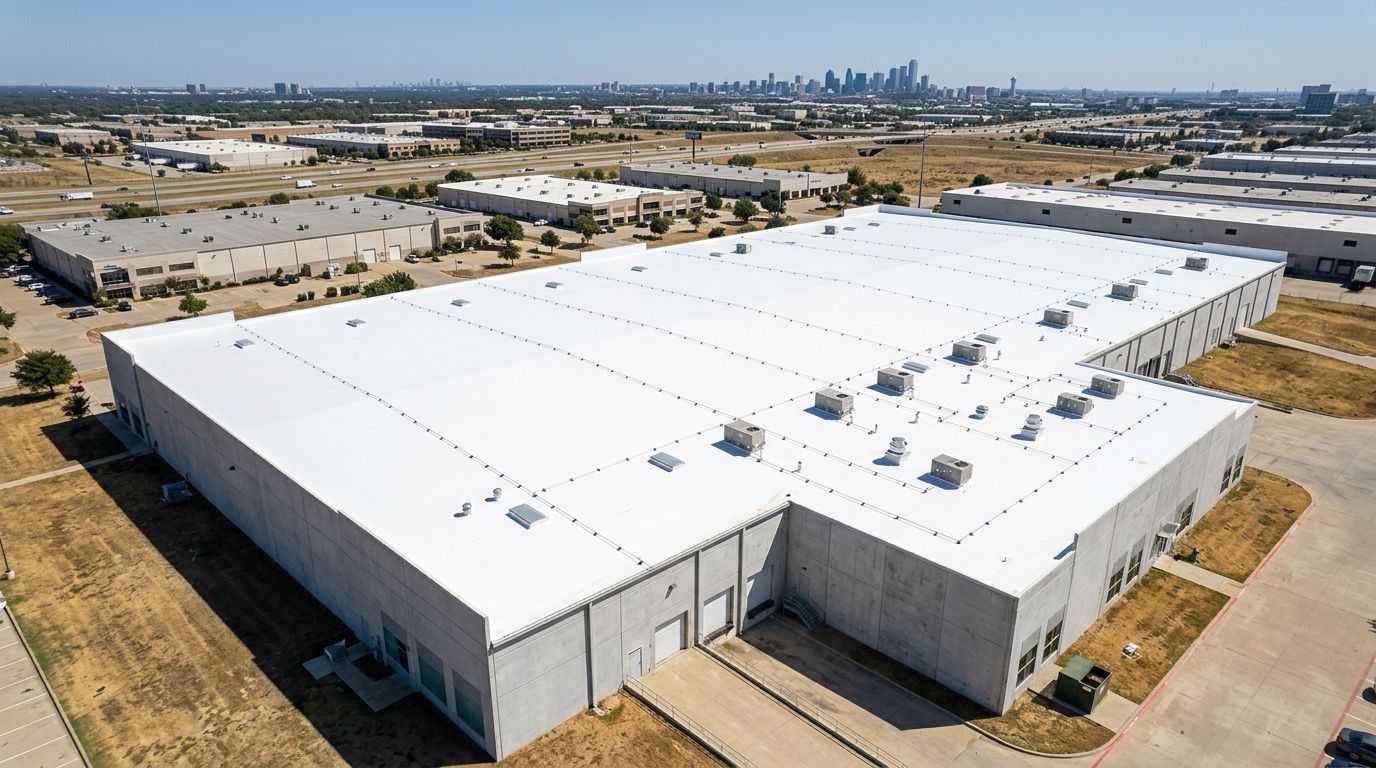
PVC membrane roofing withstands the temperature extremes that cycle between freezing winters and summer days exceeding 100 degrees across Weatherford, Burleson, Crowley, and the broader North Texas region. TripleC Roofing TX installs PVC systems using either fully adhered or mechanically fastened methods, depending on the building's wind exposure and structural deck type. Industrial facilities with rooftop exhaust vents or grease-laden air benefit from PVC's resistance to chemical degradation that can break down other roofing materials over time.
The installation process begins with substrate evaluation to determine fastening requirements and insulation specifications. PVC sheet membrane is rolled out across the prepared deck, then either adhered with bonding adhesive applied to the full surface or secured with plates and fasteners along seam edges before heat-welding the overlapping joints.
Schedule a building assessment to review your facility's rooftop equipment layout and ventilation system configuration.
How Mechanically Fastened Systems Differ from Fully Adhered
Mechanically fastened PVC uses rows of fastener plates along membrane seams, attaching the roof directly to the structural deck through the insulation layer. This method allows the membrane to move independently during thermal expansion while maintaining a secure connection that resists wind uplift. Fully adhered systems bond the entire membrane surface to the substrate using contact adhesive, creating a uniform attachment that eliminates the potential for wind-driven water intrusion beneath the membrane.
After installation completes, you'll see smooth white or tan membrane surfaces with heat-welded seams that create watertight connections at every overlap. The PVC material reflects UV radiation rather than absorbing heat, reducing cooling loads during Weatherford's extended summer season. Properly designed drainage systems prevent water accumulation, while flashing details at penetrations and roof edges shed water away from vulnerable transitions.
Warranty coverage separates membrane material performance from seam integrity and installation workmanship, with material warranties typically extending 15 to 25 years depending on membrane thickness selected. The system includes insulation board installation beneath the membrane, providing both thermal resistance and a stable base that prevents fastener pull-through under wind load.
Common Questions About This Service
PVC roofing installation involves material selection and attachment method decisions that affect both initial cost and long-term performance for commercial buildings in the Weatherford area.
What thickness should PVC membrane be for commercial applications?
Commercial installations typically use 50-mil or 60-mil membrane thickness, with heavier gauges specified for roofs with regular foot traffic or areas prone to puncture from maintenance activity. The thicker material costs more initially but resists damage better over the warranty period.
How are PVC seams welded together during installation?
Hot air welding equipment heats both overlapping membrane edges simultaneously until the PVC softens, then pressure rollers fuse the layers together as the material cools. The resulting seam is stronger than the base membrane and creates a monolithic waterproof surface.
Why does PVC resist chemical damage better than TPO or EPDM?
PVC's molecular structure includes chlorine atoms that make the material inherently resistant to oils, greases, and many industrial chemicals that can degrade hydrocarbon-based roofing materials. This matters for restaurant roofs, facilities with rooftop HVAC equipment using refrigerants, and industrial buildings common in the Fort Worth and Arlington commercial corridors.
When should buildings choose mechanically fastened versus fully adhered installation?
Mechanically fastened systems work well for buildings with structural metal decks where direct fastening provides reliable attachment. Fully adhered methods suit buildings with wood or concrete decks where uniform adhesion prevents membrane movement, or where building codes require enhanced wind uplift resistance in high-exposure locations.
How does proper insulation placement affect PVC roof performance?
Insulation boards installed beneath the PVC membrane provide thermal resistance that prevents condensation on the membrane's underside during cold weather. Proper board layout also creates a smooth, stable surface that prevents fastener back-out and membrane stress concentrations that can occur when membranes bridge across uneven substrates.
TripleC Roofing TX evaluates your building's specific exposure conditions and provides material recommendations based on rooftop equipment, drainage requirements, and expected maintenance access patterns. Request a consultation to review attachment method options and insulation specifications appropriate for your facility's usage and location within the Weatherford and DFW service area.