Damage Assessment That Reveals Hidden Impact
Storm Damage Restoration in Weatherford for properties affected by hail, wind, and severe weather events
Hail strikes dent metal roof panels, crack asphalt shingle surfaces, and puncture flat roof membranes in patterns that correspond to storm direction and hail size, while wind events lift shingle edges, peel back metal seams, and separate flashing from penetration points where fasteners pull loose under uplift pressure. Storm damage restoration involves more than replacing visible broken material—the process includes comprehensive attic and structural inspection to document hail impact damage, wind uplift failures, and secondary water intrusion that occurred after the initial breach, then coordinating with insurance adjusters to ensure the claim covers all necessary repairs. TripleC Roofing TX specializes in storm and hail damage assessment across the Weatherford and DFW area, where spring hail and wind events drive the majority of residential and commercial roof failures and create peak demand for rapid inspection and restoration work.
North Texas experiences frequent severe weather during spring months when temperature differentials create hail-producing supercell thunderstorms, and the combination of large hail size and straight-line winds produces roof damage that is not always visible from ground level but becomes obvious during attic inspection when water staining, insulation compression, and decking deterioration reveal where impact breached the roof envelope. Insurance adjusters require photo documentation of the damage, material samples showing impact points, and written descriptions that distinguish storm damage from normal wear to approve claims, and the restoration process cannot proceed until that documentation is complete and the claim is settled.
Schedule a comprehensive storm damage inspection that includes attic access and photo documentation suitable for insurance adjuster review and claim submission.
What Storm Restoration Actually Accomplishes
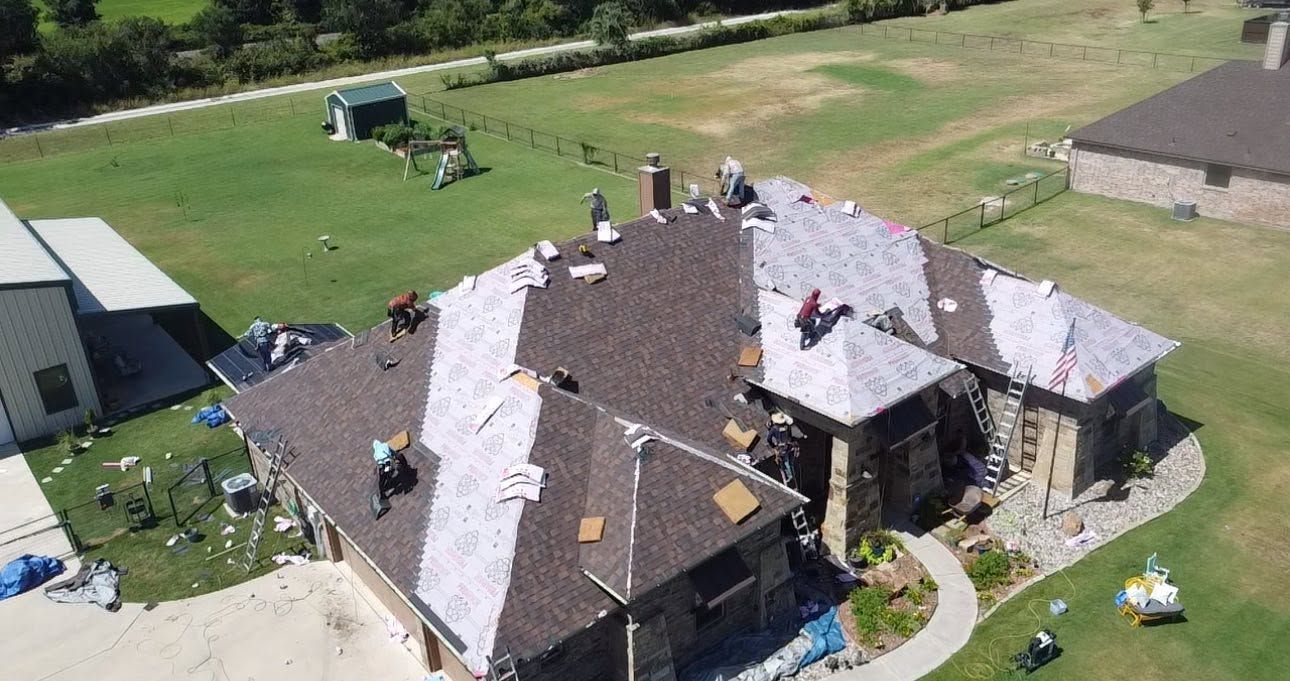
Storm damage restoration begins with the inspection phase where the crew walks the entire roof surface looking for hail impact craters, missing shingles, lifted metal panel seams, and damaged flashing, then enters the attic to trace water intrusion paths, measure moisture content in decking and framing, and identify structural damage that occurred when wind pressure exceeded fastener holding strength. The crew photographs every damage location from multiple angles, collects measurements showing impact depth or material displacement, and creates a written report that separates primary storm damage from pre-existing wear or deferred maintenance so the insurance claim focuses on covered losses.
Once restoration is complete, your property will have a roof system that sheds water cleanly without leaks during rain events, resists future hail impact through upgraded material selection if the original roof was under-specified for local storm conditions, and maintains structural integrity because all compromised decking and framing was replaced during the restoration rather than hidden under new surface material. For commercial properties with flat or low-slope roofs, TPO or MODBIT membrane replacement eliminates ponding water areas where the original installation settled unevenly, and seam welding at higher temperature settings creates bonds that withstand thermal cycling and wind uplift better than the factory seams that failed during the storm.
The restoration includes insurance adjuster communication throughout the project, material warranty activation once installation is complete, and final inspection photos showing that all documented damage was addressed. TripleC Roofing TX currently manages 17 commercial project bids and handles large-scale restoration work for multi-unit properties where a single storm event damages multiple buildings requiring synchronized repair to avoid extended exposure periods.
Common Questions About This Service
Storm damage restoration raises questions about claim processes, material upgrades, and how to distinguish covered damage from maintenance issues that property owners must fund separately.
How do you differentiate storm damage from normal roof aging during the assessment?
Hail creates impact craters with fractured material radiating from the center point, wind damage shows directional lifting patterns and fastener pullout consistent with uplift forces, while aging produces uniform granule loss and brittleness across the entire roof surface without the localized failure patterns that storms create.
What documentation do insurance adjusters require to approve storm damage claims in Weatherford?
Adjusters need dated photos showing damage locations, written descriptions linking damage to documented storm events with specific dates and hail sizes, material samples if requested, and estimates separating storm damage repair from unrelated maintenance work that is not covered under the policy.
How soon after a storm should I request a damage inspection?
Inspections should occur within days of a severe weather event so damage documentation is fresh and clearly linked to the storm, because delays allow normal wear to obscure storm-specific failure patterns and give insurers grounds to argue that damage occurred over time rather than during a single covered event.
Why does restoration cost vary significantly between similar properties?
Damage extent depends on roof age and condition before the storm, material type and impact resistance, roof pitch and orientation relative to wind direction, and the presence of nearby trees or structures that affect wind loading and hail impact angles, so two identical homes can sustain very different damage levels from the same storm.
What happens if the insurance claim is denied or only partially approved?
The restoration estimate separates covered storm damage from non-covered items so you can proceed with critical repairs using available claim funds, appeal the denial with additional documentation if warranted, or fund remaining work separately while maintaining warranty coverage on the completed restoration sections.
TripleC Roofing TX works directly with insurance adjusters throughout the claim and restoration process, providing documentation and technical explanations that support accurate damage assessment and appropriate claim settlement. Request an immediate post-storm inspection by calling (817) 308-2098 to begin the damage documentation and restoration planning process.