
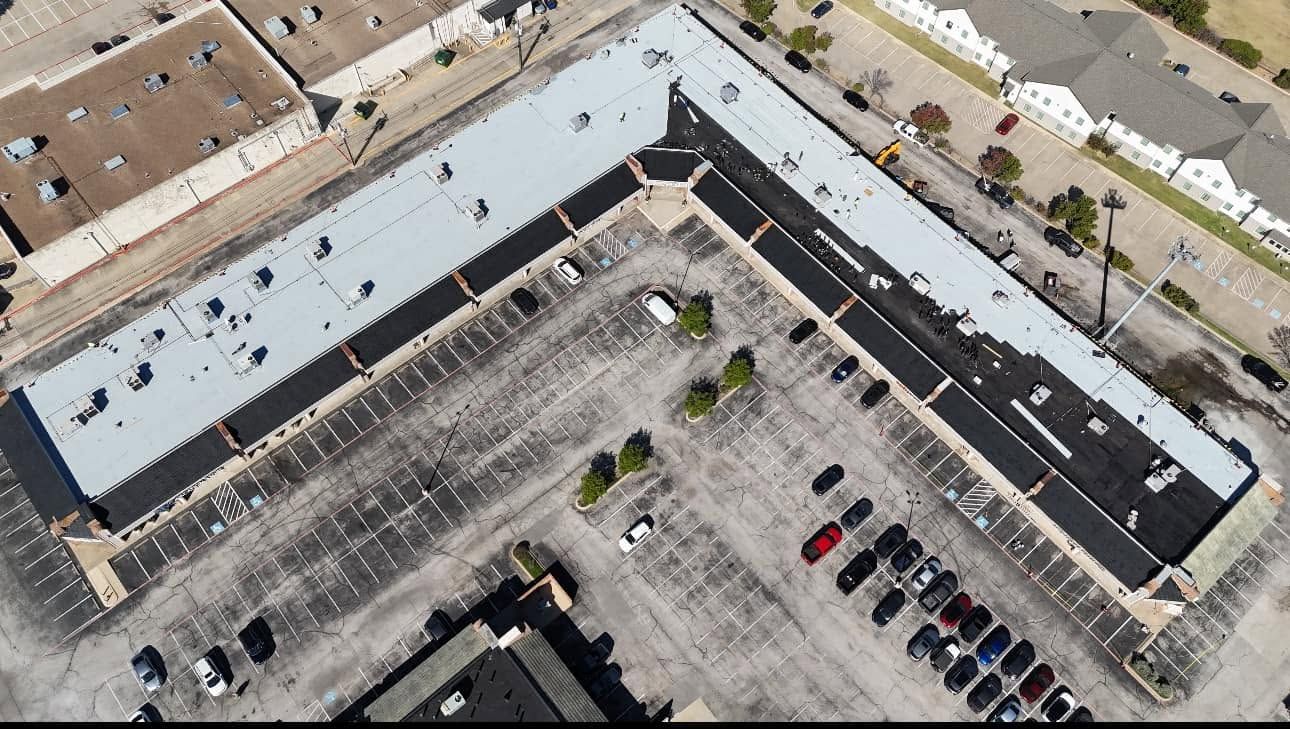
Flat Roofs That Withstand Texas Weather
TPO Roofing in Weatherford for commercial and residential flat roofs exposed to hail and extreme seasonal temperature changes
TripleC Roofing TX installs TPO roofing systems with heat-welded seams across Weatherford, Azle, Springtown, and the surrounding area. TPO membranes reflect UV radiation and resist the kind of hail impact common in North Texas, making them a practical choice for flat and low-slope roofs that face seasonal temperature swings from freezing winters to hundred-degree summers. You'll notice the white or light-colored surface that actively reflects sunlight rather than absorbing heat into the building below.
The heat-welded seam installation method bonds overlapping membrane sheets together through controlled heat application, creating a watertight connection that won't separate when the roof expands and contracts during temperature shifts. Proper underlayment selection during installation accounts for attic ventilation requirements, preventing trapped moisture that can compromise the roof deck over time.
Request a property evaluation to determine if TPO installation suits your building's structure and exposure conditions.
What Heat-Welded Seams Actually Accomplish
Heat-welding uses direct thermal energy to melt and fuse the membrane layers at seam overlaps, creating a bond stronger than the membrane itself. This approach avoids the adhesive-only methods that can fail under thermal expansion, especially during the rapid temperature changes typical of North Texas weather patterns. The welded connection remains flexible enough to move with the membrane while maintaining a complete seal against water intrusion.
After installation, you'll see a continuous white surface without exposed fasteners or vulnerable adhesive lines. The roof sheds water to perimeter drains without pooling in seam valleys, and the reflective surface reduces cooling loads during summer months. Material warranties typically span 20 to 30 years, with labor warranties covering the installation work separately.
The system includes proper insulation board placement beneath the membrane and flashing details at penetrations, curbs, and roof edges. Attic ventilation assessment occurs before installation to prevent condensation buildup that can rot decking from below, a concern often overlooked in flat roof projects.
What Property Owners Usually Ask
TPO roofing involves specific installation methods and material characteristics that affect long-term performance, especially in the Weatherford climate where hail and temperature extremes test roofing systems throughout the year.
How does TPO handle hail impact compared to other flat roofing materials?
TPO's flexibility allows it to absorb hail strikes without cracking, unlike more rigid materials that can fracture on impact. The thermoplastic composition regains its shape after impact rather than leaving permanent dents that compromise the waterproof barrier.
What preparation does the roof deck require before TPO installation?
The deck must be clean, dry, and structurally sound, with any damaged sections replaced before membrane application. Insulation boards are mechanically fastened to the deck first, providing both thermal resistance and a smooth surface for the TPO membrane to bond against.
Why choose heat-welded seams instead of adhesive-only installation?
Heat-welded seams create a molecular bond between membrane layers that won't degrade under UV exposure or separate during thermal cycling. Adhesive-only methods rely on chemical bonds that can weaken over time, particularly in the temperature extremes common across Weatherford and surrounding areas.
How long does TPO membrane installation typically take?
Installation duration depends on roof size and complexity, but the heat-welding process requires dry conditions and specific temperature ranges to achieve proper seam fusion. Weather delays are common during North Texas spring storm seasons.
What maintenance does a TPO roof require after installation?
Periodic inspections check for debris accumulation around drains, punctures from foot traffic or falling branches, and seam integrity at high-stress areas like corners and penetrations. The reflective coating maintains its UV resistance without reapplication, unlike some coating systems that require renewal.
TripleC Roofing TX provides detailed material and labor warranty documentation at project completion, clarifying what coverage applies to membrane defects versus installation workmanship. Schedule a consultation to review your building's specific drainage patterns and structural requirements for TPO system installation.